QANGA v0.0.23a adds modules, neural wall, IC Labs intranet
QANGA's v0.0.23a update is live. It introduces modules and a new neural wall, reworks most interfaces and settings, adds an IC Labs intranet, local storage chests, three radio stations and a construction tutorial, plus combat, vehicle, performance and save fixes.
Modules, neural wall and progression
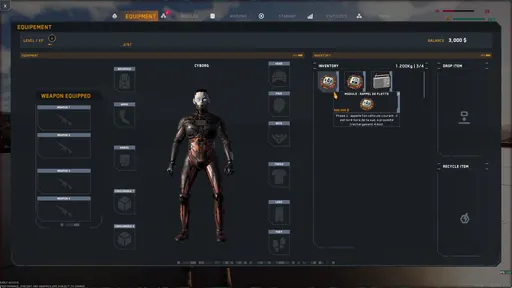
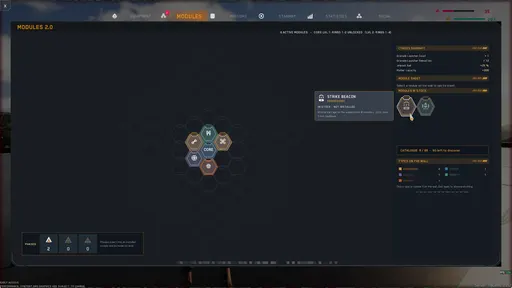
Modules are real items found in bunkers, relays, ruins, warp markets and industrial sites. They respawn slowly with a shared server state that persists through restarts; enemies, including some police units, can drop them, and dispensers sit in the awakening room and garage. Install one in a free cell in three seconds, insert phases to set level and effects, and remove it to return the item and phases. The General System sets capacity; over-capacity modules go inactive until space is freed.
Named implants include Leg Servomotors, Jump Actuators, Kinetic Dampers, Orbital Thruster, Nano-Regenerator, Shield Overlay, Sealed Container (saves backpack contents on death), Digitic Bag, Matter Compactor, Negotiator, Geologist, Drone Armor, Nano-Repairer, Pheromone Mask, Signature Jammer, Voss Countermeasures, QPD Decoder, Bounty Hunter, Machine Bane and Long-Range Antenna (radio without a portable receiver). Repair, Drone, Scanner and Jetpack arrive at phase 1 in the tutorial and remain available if you skip it. Building now requires the Construction Matrix, Assistance requires the Transit Transponder, and recruiting companions requires the Leader Protocol. The module wheel has 14 slots across two rings.
Strikes, squad calls and active modules

Hold X to designate, throw with left mouse button, release X to cancel. Strike Beacon calls an orbital barrage, Supply Drop delivers ammunition and healing for your group, and a Lavrik flies in, opens its ramp and deploys your squad. You can lock up to six targets; brief obstructions do not immediately break locks. Other modules include Wasp Nest micro-missiles, unguided Hornet Nest sticky grenades, Medical Drone, Sentry Turret and Leader Protocol, which grows your squad to three companions by level. The HUD explains refused calls and keeps markers and cooldowns visible.
Interface, intranet, settings, construction and storage
Lobby, loading screens, inventory, statistics, Social menu, customization, HUD, StarMap and settings are overhauled. Health, shield and matter get separate gauges; hold F1 for key hints; the minimap moves to 16:9. Statistics becomes a character sheet with a 3D preview and 40 attributes grouped by body part; customization splits head, torso, arm and leg colors.
Terminals and ship screens run an IC Labs intranet with over 50 pages, ic:// addresses and CIVIS search, showing credits, missions, modules, offenses, wanted level and local conditions. You can switch radio stations and track missions from a screen. Graphics, audio and gameplay settings are rebuilt with search, numeric entry and descriptions; graphics lists 59 options. Controls support multiple bindings per action, and an axes tab configures controllers, joysticks, HOTAS setups and pedals with calibration, dead zones, sensitivity, inversion and live signal display.


A new mission introduces the Builder and teaches you to construct a shelter, with Tona voice lines and localized subtitles. Storage chests show contents beside your backpack for two-way drag-and-drop. A Builder-crafted machine-gun turret engages ground hostiles and ships but does not persist between sessions. Steel joins world deposits and scanner detection, extra Stone deposits appear in some caves, and tutorial inventory, equipment, credits, XP, level, matter and modules carry into the universe.
Radio, lighting, performance and saves
Three stations arrive: HitWall (Capital Top 40, pop/dance/K-pop), Radio Sable (desert blues, afrobeat, raï) and Yellow Roots (reggae, dub, hip-hop), plus a new 33-minute Chill FM show—nearly two hours of added programming.
Natural caves are darker while bunkers and labs keep readable interior lighting; planetary ambient lighting no longer darkens the same half of the globe. Performance work moves part of terrain generation to the GPU, preloads world resources, spreads AI navigation across frames and trims UI updates. DLSS Balanced no longer silently reverts to Quality; DLSS, FSR and XeSS are respected. Saves are more reliable, and crashes around companion portraits, memory cleanup, teleportation and atmospheric materials are fixed.
99 achievements, 11 languages and next steps
All 99 achievements now track unlock conditions, backed by persistent statistics. Translations expanded across 11 languages, intranet included, and the roadmap is readable in the lobby in French, English or Spanish. The next update targets a smoother way to display landscapes. The team recommends recompiling shaders and resetting your game so you do not miss tutorial modules, and notes nights are currently a little too dark and will be fixed shortly.