Farming Simulator 25: Beans & Alpacas maps Brazil's Catuaí for Oct. 27
Farming Simulator 25: Beans & Alpacas launches October 27, taking players to Catuaí, a new map inspired by rural Brazil. Pre-orders are open; the DLC detail page has more information.
A Brazil-inspired map of rivers and red soil
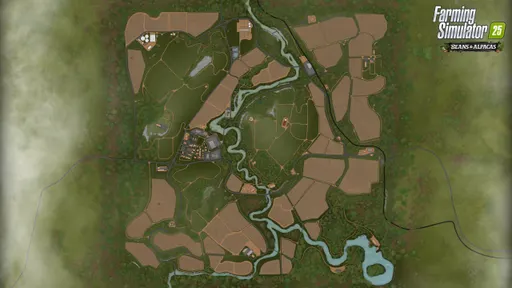
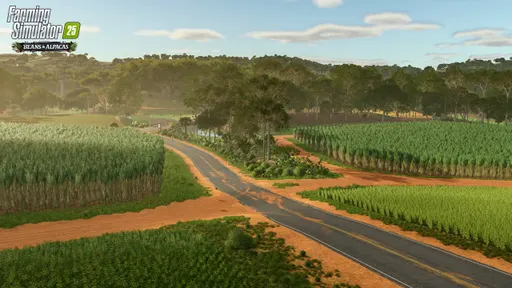
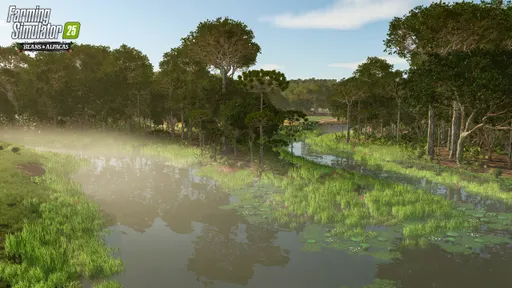
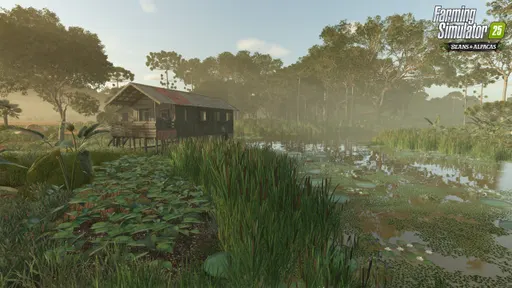
Catuaí is built around wide, rolling hills, tropical vegetation and a winding river that connects farms, production sites and a lively village. Wooden bridges carry roads over the water toward the jungle and surrounding farms, while the starter farm opens onto a scenic view of the landscape. From there, roads lead to coffee-growing hills, production facilities, the rainforest and the village at the center of local activity.
The map’s distinctive look comes from terra roxa, the iron-oxide-rich red soil characteristic of the region. Dense Atlantic rainforest, new trees and bushes, coffee plantations on the hillsides, compacted earth walls, Brazil-inspired infrastructure and regional details complete the setting. The roads also use new high-resolution surfaces, including hexagonal paving stones around the village.
Coffee, paint and village production
The starter farm includes a farmhouse and a selection of vehicles, with free-roaming chickens around the farm. Catuaí has two gas stations, the larger one in the village, plus production and service points including a spinnery, logistics center, paper mill, oil refinery, animal dealer and vehicle dealer.
Coffee-processing facilities are spread across the map. The new paint production chain turns dye and resin into paint at the Paint Factory, with several materials available for producing the dye.
Rainy season, wildlife and places to explore
Catuaí has no snowy winter; its climate is divided between a dry season and a rainy season. When rain falls, puddles form on roads and concrete, the red soil darkens, asphalt changes appearance, porous brickwork absorbs moisture and changes color, and metal develops a reflective layer of water.
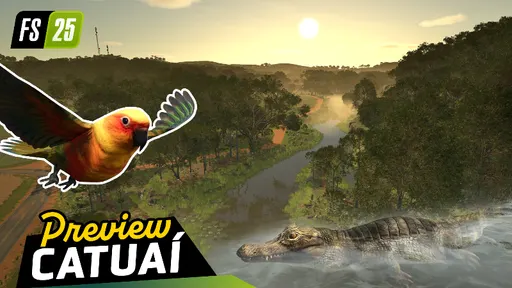
Parrots and caimans are among the regional wildlife you can encounter while exploring. The caimans do not bite. At the edge of the map, hidden among the rainforest, a research station built in a traditional wooden style with a thatched roof offers information about Catuaí and the region. Posters cover local trees and bushes, sugarcane, coffee, alpacas, traditional instruments and other regional characteristics.
A museum in town lets you put a dinosaur on display out front after finding its bones across Catuaí to rebuild the skeleton. Hiking spots around the map include places where you can observe the results of your work in the distance.